
Kelowna: The Kelowna Chamber travelled to Victoria earlier this week to participate in the annual Canadian Chamber policy conference, and to present two of its home-grown policies to 415 delegates representing 192 Chambers from across the country.
Both passed; both were generated at the local level with ideas and input from Kelowna Chamber members; both have the potential to have a positive impact in Kelowna and across the country. They will next be taken formally to Parliament Hill for federal leaders to hear directly from policy leaders at the Canadian Chamber.
“Countering the Cost of Crime on Canadian Small Business” is truly a grass roots policy born in Kelowna, but quickly embraced by chambers across the country. It seemed that no chamber in any city, small, medium or large has escaped the negative effects of street crime on business. The issue, of course, is how to fix the problem, return businesses small and large to a state where they can spend profits on sustainability, growth and attracting new customers, rather than on security, theft loss, and staff retention. The Chamber’s recommendations, including tax relief, were heartily endorsed by delegates, and passed by 91% majority vote.
“Powering Canada’s Future: The Urgent Need for Electricity Capacity Growth to Support Housing Construction and Data Centre Development” The second policy started its path several years ago in Kelowna when the Chamber heard from the Mission Group that buildings/high rise homes were being built but not given occupancy permits because of a shortage of electricity to run the building: from parking garage ingress/egress systems, to appliances, to simply running elevators and the HVAC.
Repeated requests made to energy providers such as FortisBC resulted in hearing that there would be a one- to two-year gap in provision of services, eventual delay of building permits from the City and various downstream effects (negative) on the construction and the real estate industries.
Digging deeper, the Chamber discovered a Canada-wide issue with power provision which not coincidentally paralleled the growth of demand for data centres, and increased technological support for EVs and other emerging power demands. Hence the policy, which will hit Ottawa ministries at the same time as the current federal government’s recognition of the issue begins the long process of updating the country’s energy strategy, needs and major project implementation. A timely policy that was adopted by a voting percentage of 98% in Victoria and garnered much discussion and debate at the Conference.
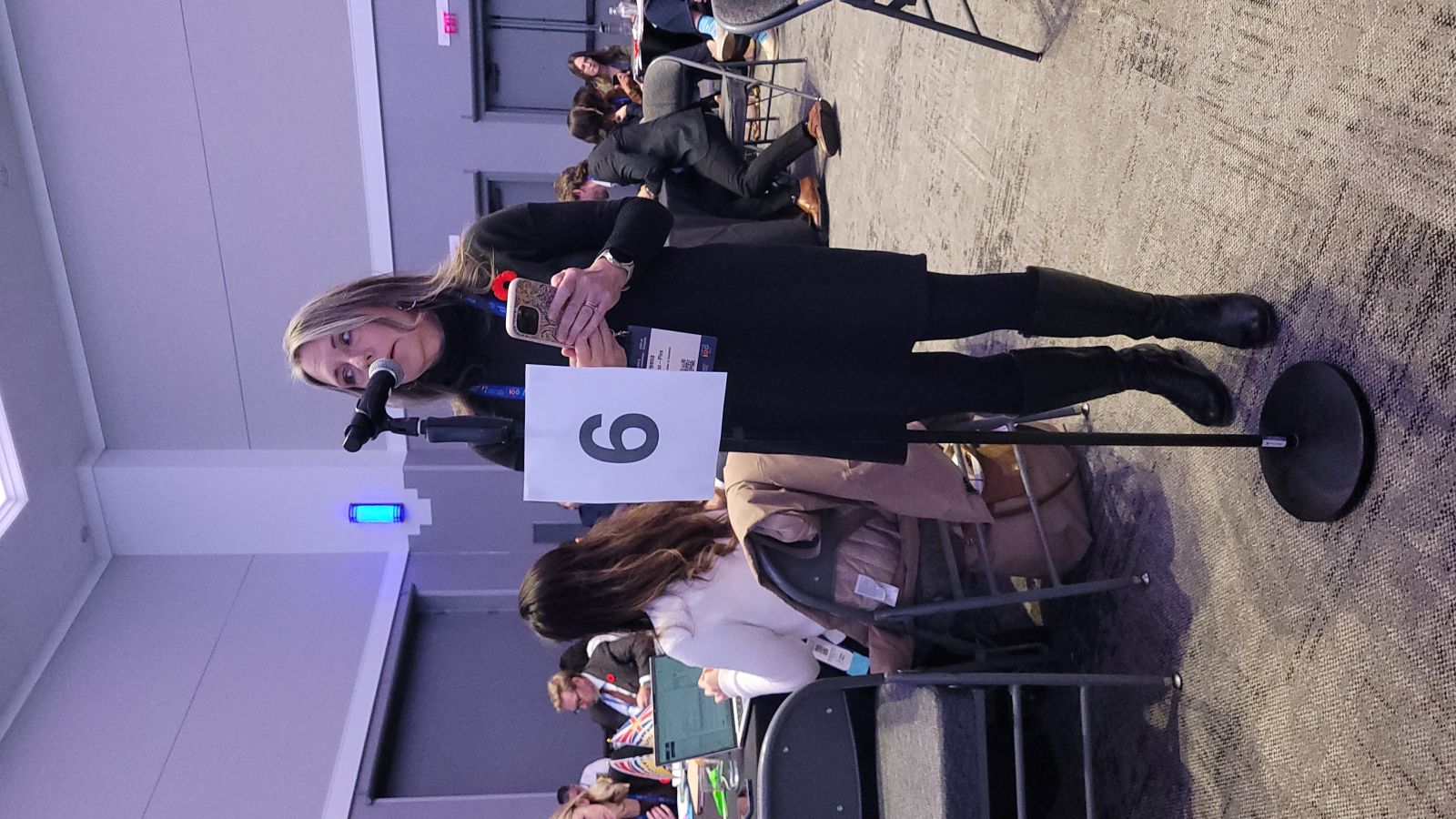
Treena Piva, Vice-president of the Kelowna Chamber took part in all the policy discussions in Victoria, presented the successful Crime policy, and said this about the process: “This was my first Canadian Chamber policy conference, and it was a great opportunity to connect with Chamber leaders from across the country and see firsthand the work that goes into developing policies that address the challenges facing Canadian businesses. What stood out to me was how many of the issues we're dealing with here in Kelowna are shared by business communities across Canada.”
“Having a seat at the national table gives us the opportunity to ensure Kelowna's business community has a voice in shaping policies that affect them. For me, that's one of the most important parts of the work we do as Chamber leaders,” said Piva.
For complete copies of the final policies, as amended and adopted, in English and French, contact the Kelowna Chamber for assistance. hello@kelownachamber.org
Ester Pike stickhandles feedback on the Powering Canada's Future policy in Victoria on October 29, 2026

Treena Piva pitches the "Countering Crime" policy and garners a 91% positive vote.